
New One Health Knowledge Exchange Network (One Health KEN) to inform EU policy-makers through the Science Service for Biodiversity”
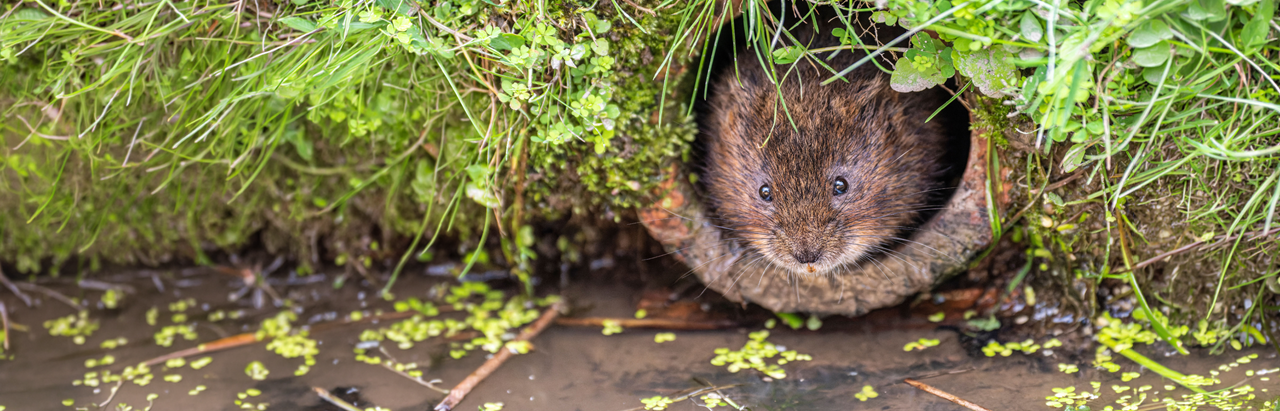
Five Horizon Europe projects have joined forces to launch the One Health Knowledge Exchange Network (One Health KEN) during World One Health Congress 2026 that took place in Lisbon, a new initiative designed to strengthen collaboration and knowledge exchange across biodiversity, ecosystem change and health.
The One Health approach recognises the close interconnections between human, animal and environmental health. Complex challenges such as emerging infectious diseases, antimicrobial resistance and food safety cannot be effectively addressed by individual sectors or disciplines. They require integrated approaches, stronger collaboration and, importantly, better exchange of knowledge between science, policy and practice.
The One Health KEN, led by RESTOREID and supported by BioAgora, brings together its sister projects BCOMING, BEPREP and ZOE to help strengthen these connections and support the translation of knowledge into action.
Connecting knowledge, networks and policy
The One Health KEN will focus on three complementary areas of action:
-
Linking with biodiversity policies and strategies: The network will identify and respond to policy needs at the intersection of biodiversity, ecosystem change and health, helping to ensure that relevant evidence and expertise can contribute to policy development.
-
Activating and supporting existing networks: Rather than creating a parallel structure, the One Health KEN will connect with existing European and international networks, initiatives and key actors. By identifying opportunities for collaboration and exchange, the network will seek to build on existing expertise and strengthen synergies.
-
Building capacity, outreach and governance: The network will bring together representatives from the European research and innovation community, facilitate dialogue and knowledge exchange, and create opportunities to jointly identify priorities and future actions.
"The One Health KEN is not intended to create another network alongside the many initiatives that already exist. Its ambition is to connect these communities, strengthen dialogue between science and policy, and create mechanisms through which existing knowledge and expertise can better contribute to decision-making."
Supporting the European science–policy interface
The One Health KEN will contribute to addressing policy needs through the future Science Service for Biodiversity (SSBD), which aims to provide the scientific pillar of the Knowledge Centre for Biodiversity (KCBD).The development of the network builds on identified knowledge gaps and recommendations concerning the links between biodiversity and health. These include findings from the 2023 Eklipse report on biodiversity and pandemics and the recent position paper “Embedding biodiversity within One Health.” By connecting existing initiatives and facilitating dialogue across scientific disciplines, policy communities and practice, the One Health KEN aims to strengthen the ability to translate evidence into concrete action for biodiversity, health and society.
Join the One Health KEN
Organisations, researchers, policymakers, practitioners, networks and other stakeholders working at the interface of biodiversity, ecosystem change and health are invited to join the One Health KEN community and contribute to shaping its future.
To find out more, scan the QR code below, visit the KEN webpage: https://bioagora.eu/knowledge-exchange-networks/onehealth, or contact the team at one-health@bioagora.eu.
About the One Health Knowledge Exchange Network
The One Health Knowledge Exchange Network (One Health KEN) is an initiative bringing together Horizon Europe projects and relevant stakeholders working at the interface of One Health, biodiversity and ecosystem change. It aims to strengthen connections between existing networks and initiatives, support knowledge exchange, build capacity and facilitate the uptake of scientific knowledge into policy and practice.
About the Horizon Europe projects
- RESTOREID (Restoring Ecosystems to Reduce the Risk of Emerging Infectious Diseases) is a Horizon Europe-funded project investigating how biodiversity recovery and ecosystem restoration can reduce the risk of infectious diseases. Using a One Health approach, it combines biodiversity monitoring, disease research and stakeholder engagement to explore the links between ecosystem health, wildlife and human activities. The project aims to provide scientific evidence and practical recommendations for restoration strategies that benefit biodiversity, animal health and human well-being. (Website: https://restoreid.eu )
- BioAgora is a collaborative Horizon Europe-funded project aiming to strengthen the science–policy interface for biodiversity by developing the Science Service for Biodiversity (SSBD) as the scientific pillar of the European Commission’s Knowledge Centre for Biodiversity (KCBD). By connecting scientists, policymakers, practitioners, civil society and other knowledge holders, the project intends to make scientific knowledge more accessible and relevant to policy needs, support evidence-informed decision-making and foster transformative change for biodiversity in Europe. (website: https://bioagora.eu/)
- BCOMING (Biodiversity Conservation to Mitigate the risks of emerging infectious diseases) is a Horizon Europe-funded project that addresses the critical links between biodiversity loss, ecosystem change and the emergence of infectious diseases. Adopting a One Health approach, the project brings together researchers, local communities, NGOs and other stakeholders to co-develop context-specific biodiversity conservation, restoration and disease surveillance strategies. Working across Europe and three tropical biodiversity hotspots in Southeast Asia, West Africa and the Caribbean, BCOMING aims to strengthen local capacities for biodiversity conservation and restoration, reduce zoonotic disease emergence and improve disease surveillance.(website: https://bcoming.eu/ )
- BEPREP (Identification of Best Practices for Biodiversity Recovery and Public Health Interventions to Prevent Future Epidemics and Pandemics) is a Horizon Europe-funded project exploring how biodiversity conservation and ecosystem restoration can help reduce the risk of emerging infectious diseases. Using a One Health approach, it combines ecological, epidemiological and public health research across 11 case studies in Europe and tropical regions. Working with researchers, Indigenous Peoples and local communities, the project aims to identify effective restoration practices and public health interventions to strengthen ecosystem resilience and prevent future epidemics and pandemics. (website: https://www.beprep-project.eu )
- ZOE (Zoonoses Emergence across Degraded and Restored Forest Ecosystems) is a Horizon Europe-funded project investigating how deforestation, ecosystem degradation and biodiversity loss influence the emergence of infectious diseases. Using an interdisciplinary One Health approach, it combines ecological, epidemiological and social science research across forest ecosystems in Europe and Mesoamerica. Working with local communities and stakeholders, ZOE aims to develop risk-mapping and early-warning approaches and identify strategies to strengthen ecosystem health and prevent future disease emergence. (website: https://www.zoe-project.eu )
Media contact- One health KEN:
Email: one-health@bioagora.eu
Lucinda Kirkpatrick, Candice Pouget, Marie Vandewalle, Gabriella Lovasz, Diego Ibáñez Rodríguez
